Standards & specifications
PN16, PN25, PN40 and ASME Class 125/150/300: Understanding Valve Pressure Ratings
PN and Class numbers look simple, but they are not the same thing and neither is a fixed working pressure. A practical guide for specifying valves and flanges.
By GMC Valves · · 2 min read
Every valve and flange is specified with a pressure rating, usually either a PN number (European/ISO practice) or an ASME Class (American practice, still often called "ANSI Class"). They are easy to confuse, and both are easy to misread as a simple maximum working pressure. This guide explains what they mean and the checks that matter when you specify a valve.
What PN means
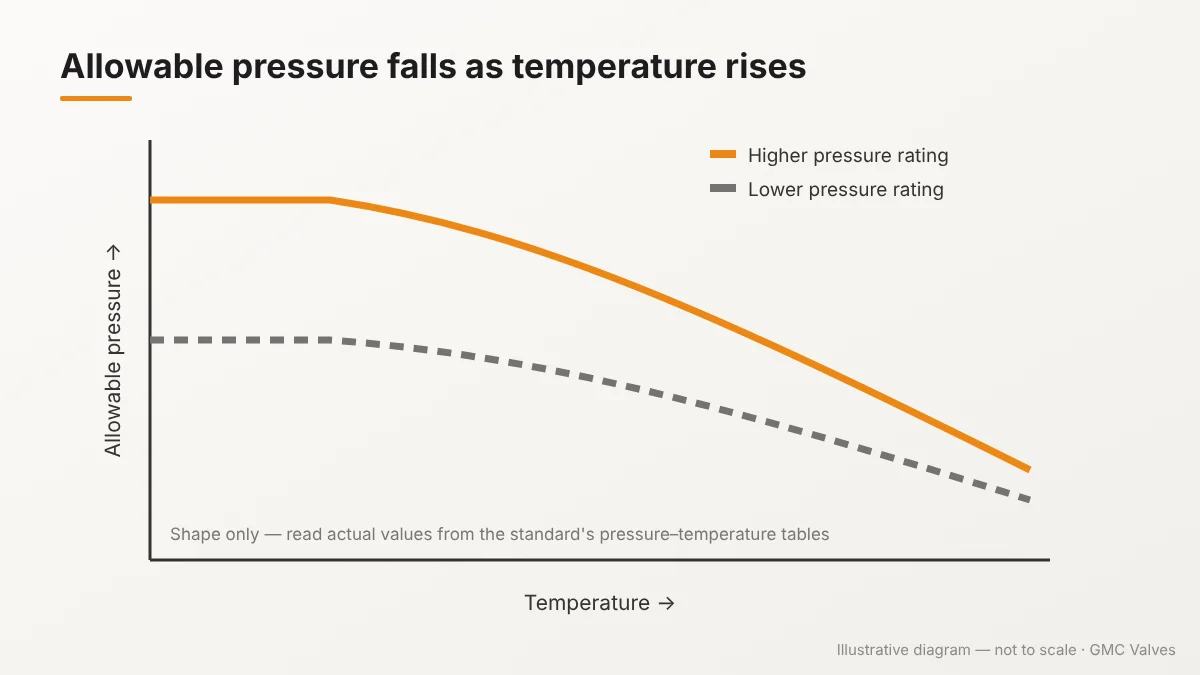
PN stands for pression nominale (nominal pressure). It is a reference number used in EN and ISO standards such as EN 1092 for flanges. PN16, PN25 and PN40 broadly correspond to 16, 25 and 40 bar at room temperature for the reference material. At higher temperatures the allowable pressure is lower, and the exact value depends on the material group and the standard's tables.
What ASME Class means
ASME classes — 125, 150, 300 and higher — are pressure-class designations used in standards such as ASME B16.1 (cast iron flanges), B16.5 (steel pipe flanges), B16.42 (ductile iron flanges) and B16.34 (valves). A Class number is not a pressure in psi. For example, a steel Class 150 component is rated well above 150 psi at ambient temperature, and much less at high temperature. The allowable pressure for each class, material and temperature is listed in the standard's pressure–temperature rating tables.
Ratings fall as temperature rises
Metals lose strength as they get hotter, so the allowable working pressure for any PN or Class decreases with temperature. Grey cast iron, ductile iron and steel all have different tables and different maximum temperatures. A valve that is fine for a cold water main may not be acceptable at the same pressure on a steam line.
That is why a valve specification should always state both the design pressure and the design temperature, plus the fluid.
PN and Class flanges are not interchangeable
PN and Class flanges use different bolt circle diameters, bolt sizes and bolt counts in many sizes. Some sizes look close, but "close" is not good enough for a pressure joint. Always match:
- the flange standard (for example EN 1092 PN16, or ASME B16.5 Class 150);
- the rating;
- the facing (raised face or flat face) — flat-faced cast iron flanges are normally mated with flat-faced flanges and full-face gaskets.
If an existing pipeline uses one system and the new valve another, specify adaptor flanges rather than forcing a mismatch.
Specify for the worst case, not the normal case
The rating must cover the highest pressure the valve will see, which is often not the normal operating pressure. Check:
- pump shut-off head (the pressure when the pump runs against a closed valve);
- surge or water hammer when pumps trip or valves close quickly;
- hydrostatic test pressure applied to the line during commissioning;
- static head at the lowest point of the system.
Quick checklist for your enquiry
- Design pressure and design temperature.
- Fluid (water, steam, oil, gas, chemical) and whether it is clean.
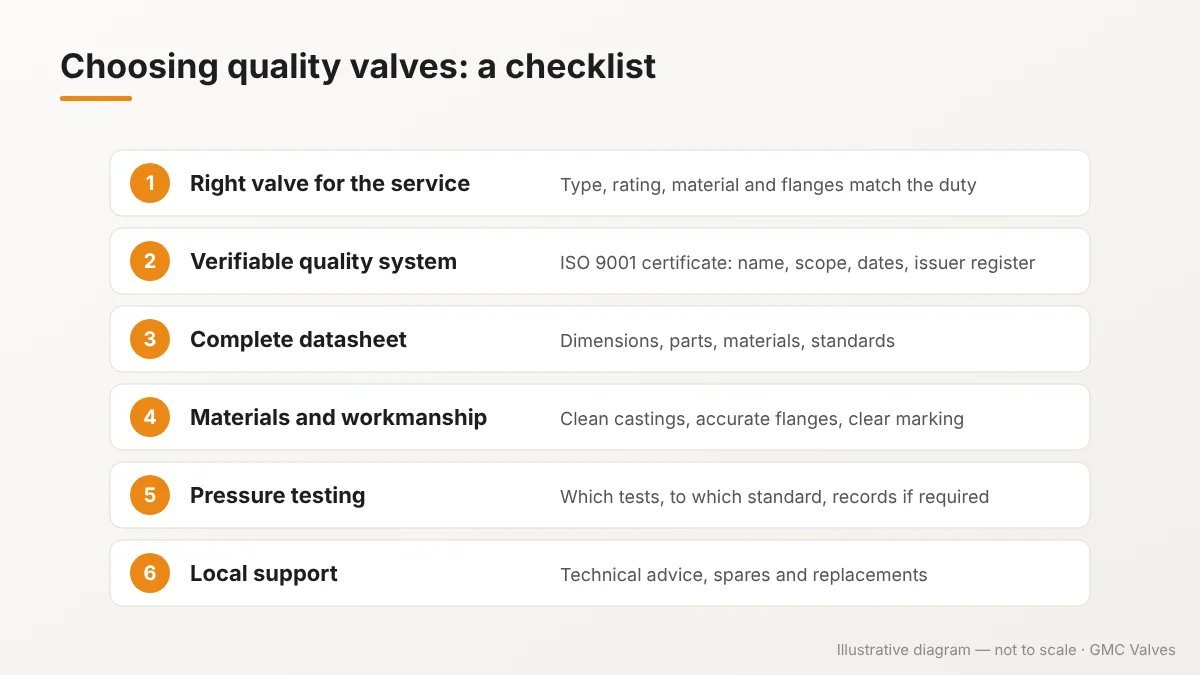
- Required rating and flange standard of the mating pipework (PN or Class, and facing).
- Body material requirement, if any.
- Any project test or inspection requirements.
GMC valves by rating
GMC's product pages list the rating shown on each datasheet — PN-16, PN-25 and PN-40, and Class 125, 150 and 300 depending on the product. Filter the product catalogue by rating, or send your service conditions with a quote request so the team can confirm a suitable valve.
Frequently asked questions
Is PN16 the same as Class 150?
Does Class 150 mean 150 psi?
Why do I need to give the temperature as well as the pressure?
Products mentioned in this article

Gate Valve – Ductile Iron, Class 150, Rising Spindle
- Body
- Ductile Iron
- Rating
- Class 150
- Sizes
- Sizes DN50–DN800